

… a romantic warren of arcaded streets, Padua has long been one of the major cultural centres located in Veneto region.
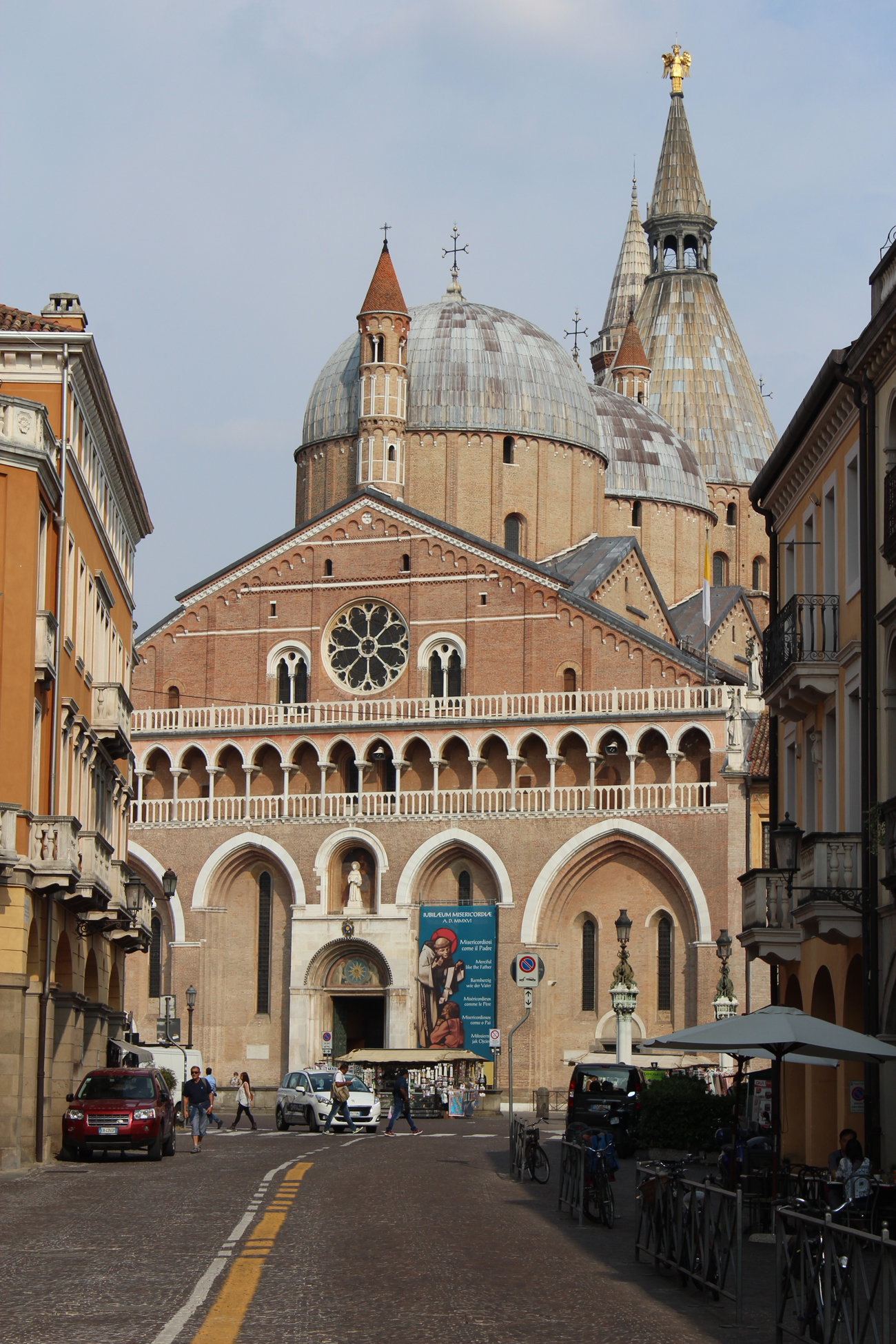
Rich in art and architecture, it has several outstanding sights like Basilica di Sant’Antonio, Palazzo della Ragione and the Botanical Garden, but the most magnificent sightseeing is undoubtedly Cappella degli Scrovegni, famous for Giotto’s lyrical frescoes, the highlights of our whole trip. The ancient episcopal and university town lies on the banks of the river Bacchiglione and while navigable channels link it to the river Po, the river Brenta connects it to the Venetian Lagoon. Padua is full of traces of various periods: of the early Venetian and Roman times, of the Middle Ages and Renaissance. Yet, the chief attraction of Padua is without doubt the Basilica of Sant’Antonio, a place of workship for pilgrims coming from all over the world. The huge church which combines elements of Byzantine, Romanesque and Gothic styles, was probably begun around 1238, seven years after the death of the Portuguese-born saint. It was completed in 1310, with structural modifications added from the end of the 14th century into the mid-15th century. The interior contains a great number of remarkable works of art, among which frescoes of the 14th century by Altichiero and Giusto de Menabuoi, and sculptures by the most important representative of early Florentine Renaissance Donatello.
Another monument of particular interest in Padua is Palazzo della Ragione – also known as Il Salone. This spectacular arcaded reception hall, which divides the Piazza della Frutta from the Piazza delle Erbe, was built between 1172 and 1219, with later 14th and 15th-century additions. Giotto painted the original frescoes, which were destroyed in a fire in 1420. The existing ones are primarily by Niccolò Miretto and Stefano di Ferrara following the original plan of Giotto’s frescoes. In the Middle Ages, as its name implies, the building housed Padua’s law courts; today, its street-level arcades shelter shops and cafés. Art shows are often held upstairs in the frescoed Salone, which is one of the largest halls in Italy. A few steps from Palazzo della Ragione, we discover the fascinating Botanical Garden. The Venetian Republic ordered the creation of Padua’s botanical garden in 1545 to supply the university with medicinal plants. This incredible Garden hosts old plants, usually called “historic trees”. Like all the plants in the Garden, they are labelled with the scientific name of the species. Over the centuries Padua’s Garden has placed itself in the middle of a widespread network of International relations, by exerting a deep influence upon the research and holding a leading role in the Exchange of ideas, knowledge, plants and scientific material. On the basis of such considerations, in 1997 it has been included on the World Heritage List as a cultural good.
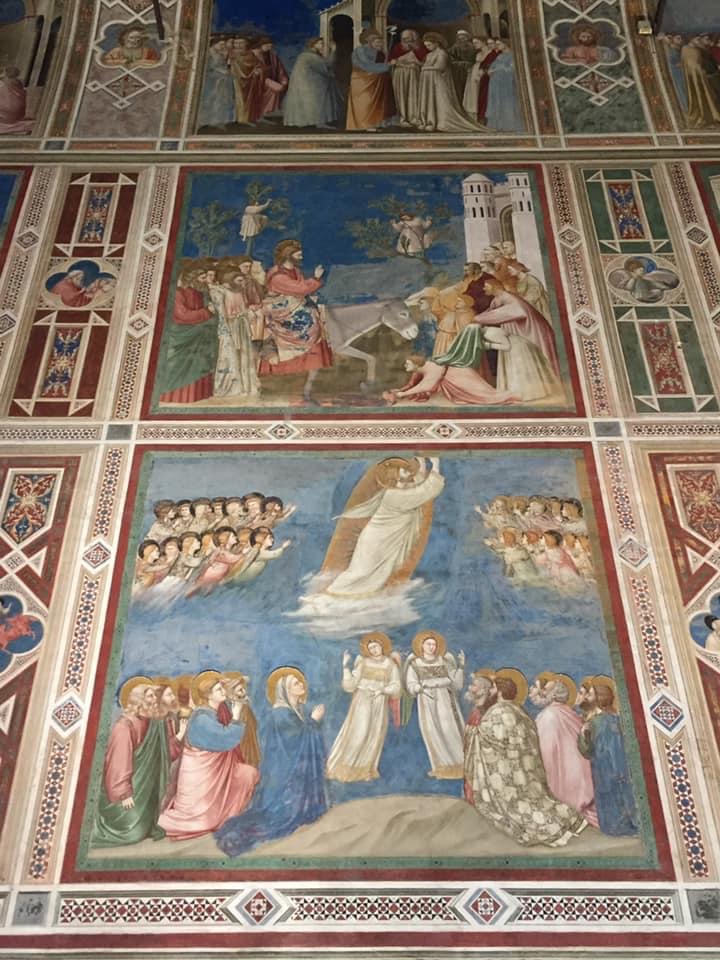
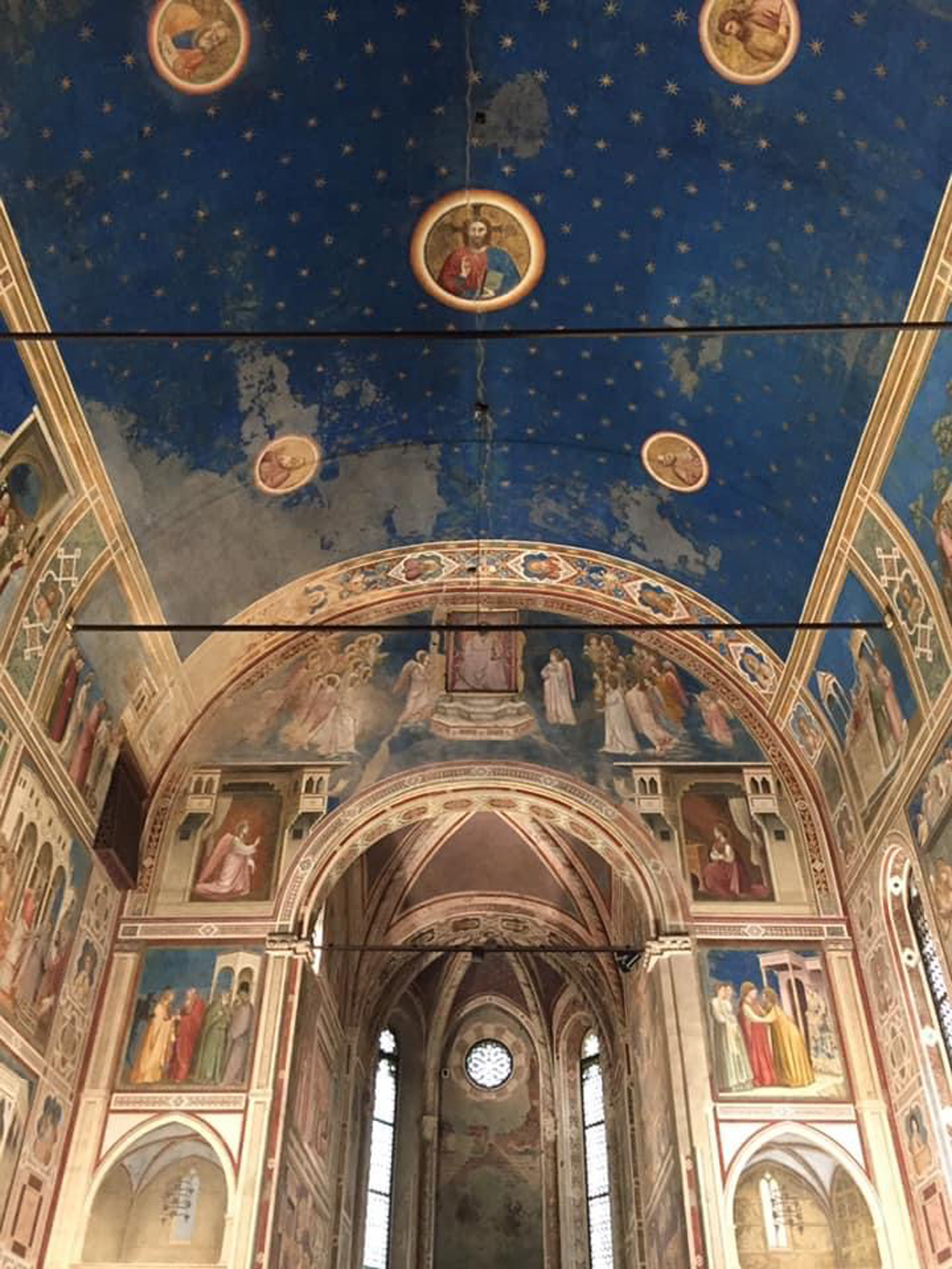
One of the gems that attract tourists from all over the world every year is the Scrovegni Chapel. This world-famous chapel and its frescoes were commissioned by Enrico Scrovegni to atone for the sins of his deceased father Reginaldo, the usurer encountered by Dante in the Seventh Circle of the Inferno in his Divine Comedy. Giotto decorated the interior from 1303 to 1305 with a universally acclaimed fresco cycle illustrating the lives of Mary and Jesus. The 38 panels are arranged in tiers and are to be read from letf to right. The spatial depth, emotional intensity and naturalism of these frescoes – note the use of blue sky instead of the conventional, depth-destroying gold background of medieval paintings – broke new ground in Western art. Opposite the altar is a Last Judgment, most likely designed and painted by Giotto’s assistants, where Enrico offers his chapel to the Virgin, celebrating her role in human salvation – particulary appropriate, given the penitential purpose of the chapel.
But no visit to Padua is complete without a trip to Caffé Pedrocchi. This imporant Café was founded thanks to the well-known coffee-maker Antonio Pedrocchi and it became a famous meeting place for literary figures, artists, mercharnts, students and teachers. You can still come here, as the French writer Stendahl did shortly after the café was established in 1831, and observe a good slice of Veneto life, especially as he noted the elegant ladies sipping their coffee: an experience to try even today! You will not sit here for a simple coffee, but to plunge into a Padua of bygone times.
Marco Rinaldo